
Disclaimer: The following article is provided for informational and educational purposes only and does not constitute legal advice. The legislative landscape is rapidly evolving, and the application of these laws depends on the specific facts of each business. Employers should consult with qualified legal counsel before making any policy changes or employment decisions based on this information.
Current Status Senate Bill 947 is currently pending in the State Senate. Introduced as a revised effort following a previous gubernatorial veto, this legislation is heavily backed by the California Labor Federation and enjoys a moderate to high likelihood of advancing through the legislature. The 2026 version specifically addresses previous executive concerns by shifting from proactive to retroactive notice requirements, but it remains a highly aggressive regulatory framework.
Employment Litigator Comments
From a defense litigation standpoint, SB 947 is incredibly dangerous because it fundamentally shifts the burden of proof in wrongful termination and discrimination claims. Historically, employers could defend against bias claims by demonstrating that termination decisions were based on objective, mathematically uniform software metrics. Litigators warn that SB 947 effectively strips away this defense. By codifying the assumption that algorithms are inherently biased, plaintiffs’ attorneys will be empowered to demand expansive, exceptionally costly discovery into a company’s proprietary algorithms to search for disparate impacts.
Business Community Comments The business community, including tech innovators and major employers across Orange County, vehemently opposes this measure. Corporate advocates argue that the bill’s definition of an “Automated Decision System” (ADS) is drafted so broadly that it inadvertently captures routine data processing tools, basic workforce management software, and standard scheduling applications. Business leaders warn that mandating human oversight for every automated data point nullifies the primary economic utility of AI—operational scalability and efficiency—and may force companies to offshore their human resources functions entirely.
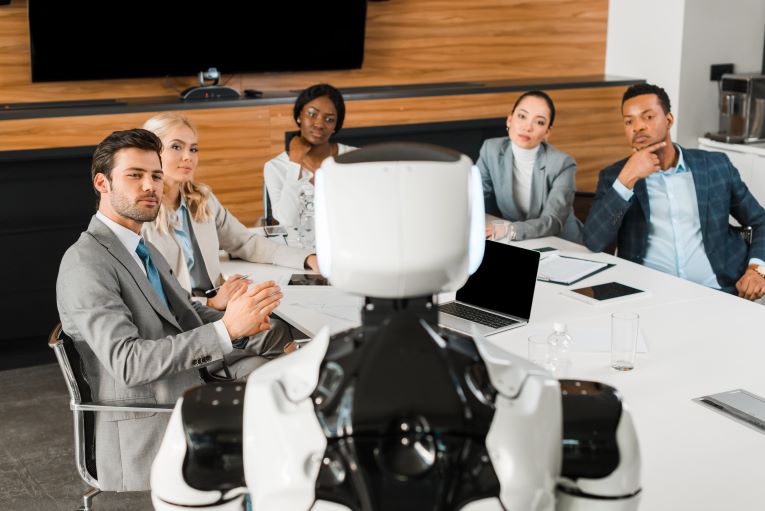
Nuts and Bolts of the Requirements SB 947 strictly prohibits employers from using an automated decision system as the sole basis for making consequential employment decisions about current workers, specifically decisions to discharge or discipline them. The bill requires that a “natural person” must make the final decision. Furthermore, the legislation introduces a new, strict prohibition on using ADS systems to attempt to predict an employee’s future behavior. It also mandates retroactive notice, requiring employers to inform a worker after an AI system was used to make or substantially assist in their discharge or discipline.
Compliance Guidance To prepare for this legislation, HR departments must begin architecting rigorous “human-in-the-loop” documentation protocols. If this bill passes, human reviewers cannot merely rubber-stamp algorithmic outputs. Employers will need to create permanent, auditable records demonstrating that a natural person reviewed the AI recommendation, applied independent judgment, and possessed the functional authority to override the software’s suggestion.
Why You Need to Work With a Business Attorney Because of This Bill
If this bill passes, working with a business attorney will be critical to insulate your company from liability. An attorney can help prepare your business by conducting privileged audits of your third-party HR software vendors to determine if their tools fall under the broad definition of an ADS. Furthermore, counsel can help negotiate strict indemnification clauses with those software providers to ensure liability for algorithmic bias falls on the developer. Finally, an attorney can draft the highly specific, legally defensible human-in-the-loop procedural documentation required to withstand aggressive scrutiny from the Labor Commissioner and the plaintiffs’ bar.

